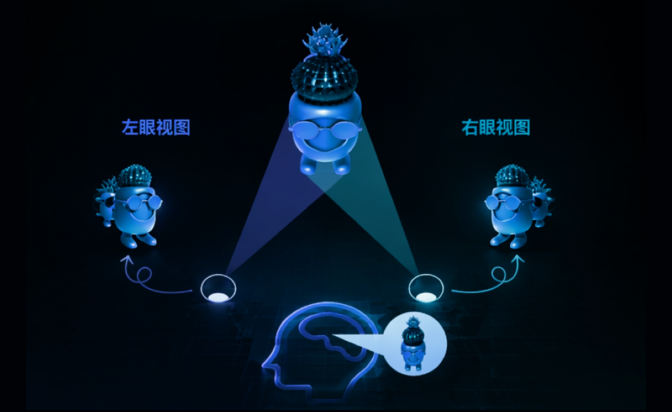
How the Brain Forms Stereoscopic Images
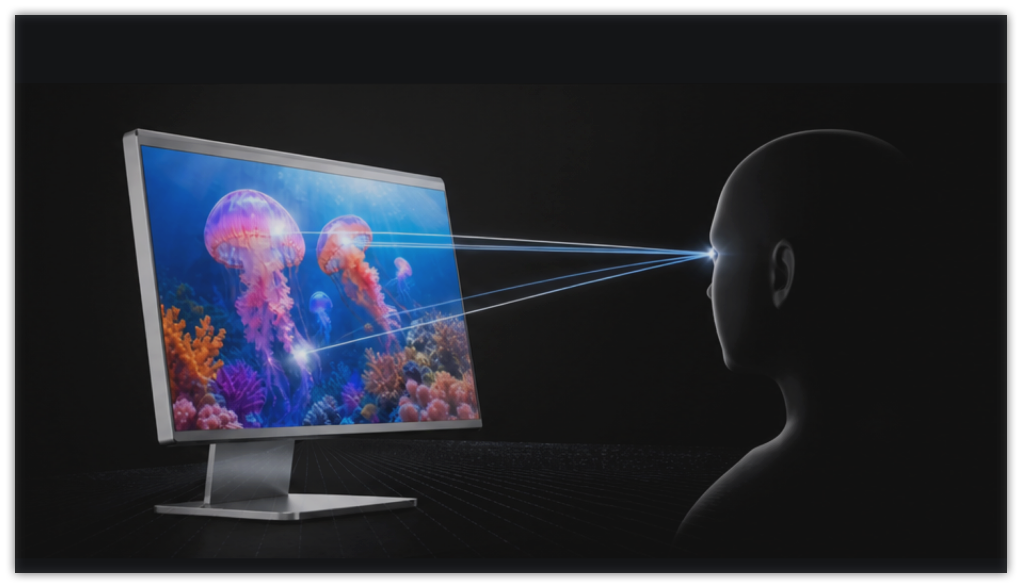
The brain fuses left- and right-eye views into a stereoscopic percept of the world. When viewing real objects, each eye receives a slightly different parallax image; their fusion produces the sense of depth.
'%3e%3cg%20id='形状'%20transform='translate(20.000000,%2013.000000)'%3e%3cmask%20id='mask-2'%20fill='white'%3e%3cuse%20xlink:href='%23path-1'%3e%3c/use%3e%3c/mask%3e%3cuse%20id='蒙版'%20fill-opacity='0'%20fill='%23D8D8D8'%20xlink:href='%23path-1'%3e%3c/use%3e%3cpath%20d='M13.2429692,2.5%20L0.757030779,2.5%20C0.33964997,2.5%200,2.16350446%200,1.75%20C0,1.33649554%200.33964997,1%200.757030779,1%20L13.2429692,1%20C13.66035,1%2014,1.33649554%2014,1.75%20C14,2.16350446%2013.66035,2.5%2013.2429692,2.5%20Z%20M13.2429692,8%20L0.757030779,8%20C0.33964997,8%200,7.66350446%200,7.25%20C0,6.83649554%200.33964997,6.5%200.757030779,6.5%20L13.2429692,6.5%20C13.66035,6.5%2014,6.83649554%2014,7.25%20C14,7.66350446%2013.66035,8%2013.2429692,8%20Z%20M13.2429692,13.5%20L0.757030779,13.5%20C0.33964997,13.5%200,13.1635045%200,12.75%20C0,12.3364955%200.33964997,12%200.757030779,12%20L13.2429692,12%20C13.66035,12%2014,12.3364955%2014,12.75%20C14,13.1635045%2013.66035,13.5%2013.2429692,13.5%20Z'%20fill='%23333333'%20fill-rule='nonzero'%20mask='url(%23mask-2)'%3e%3c/path%3e%3c/g%3e%3c/g%3e%3c/g%3e%3c/svg%3e)


Our glasses-free 3D solution integrates high-precision optical hardware with real-time rendering algorithms — purpose-built for end displays, and easy for OEMs to integrate and mass-produce.
The system projects stereoscopic imagery with true physical depth of field, breaking screen boundaries to create striking visual depth — so users enjoy immersive experiences without wearing glasses.
The brain fuses left- and right-eye views into a stereoscopic percept of the world. When viewing real objects, each eye receives a slightly different parallax image; their fusion produces the sense of depth.
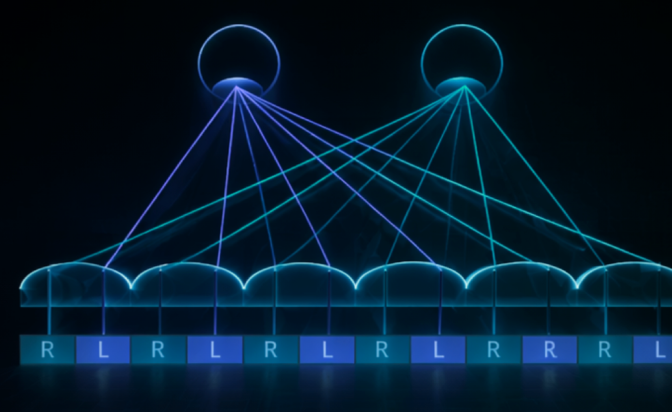
Optical structures deliver different images to the left and right eyes, creating parallax and forming a 3D effect.

The ZD-series SoC chip subsystem is the core compute platform for glasses-free 3D imaging, spanning ZD100 / ZD200 / ZD300. The chip runs real-time 3D rendering independently with zero host GPU load; it supports plug-and-play, cross-platform compatibility, and remote OTA updates. Standardized hardware–software stacks help OEMs rapidly develop and ship glasses-free 3D products at scale.
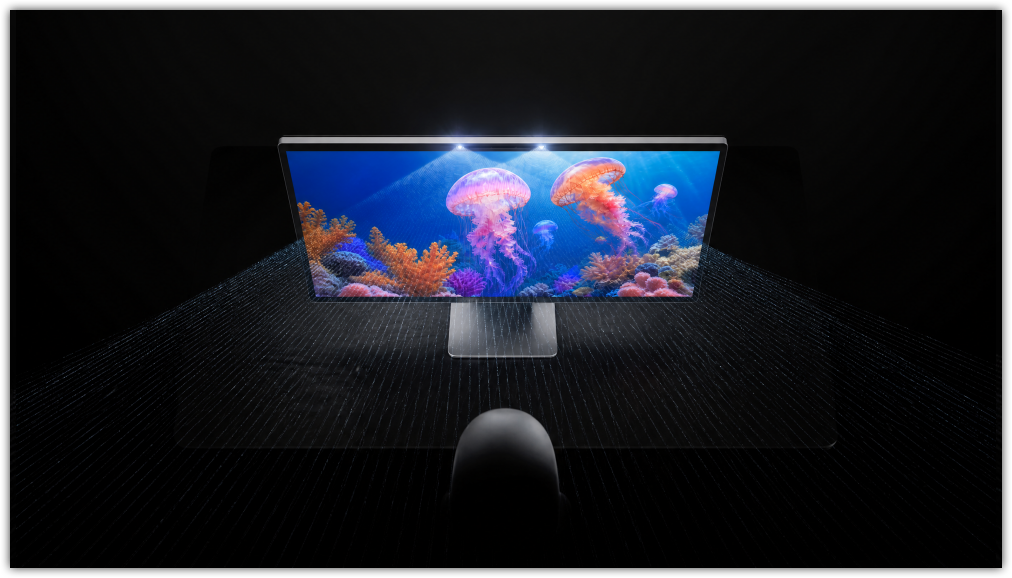
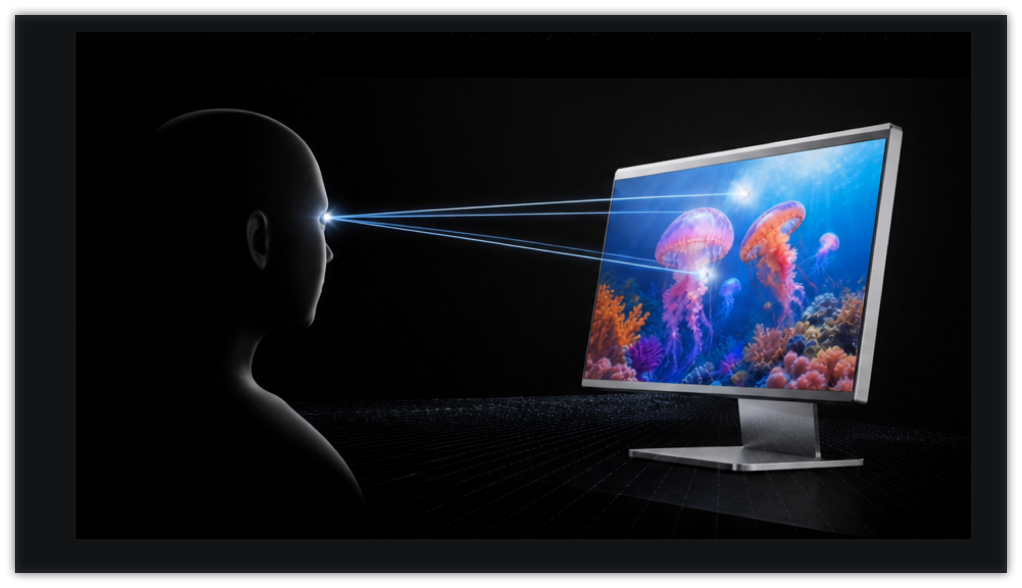
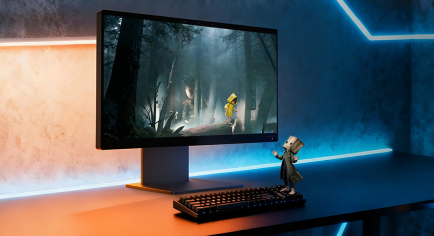
AI optimizes game visuals end-to-end — enhancing clarity, boosting frame rate via intelligent interpolation, and cutting latency. Stereoscopic depth is strengthened with gaze-based optimal viewpoints and low-latency motion handling to elevate immersive glasses-free 3D gaming.
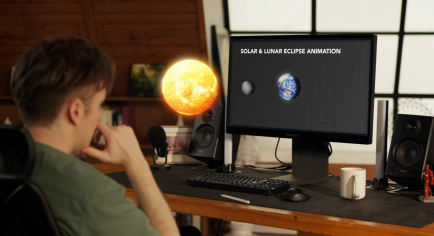
A one-stop AI toolkit for 3D creators: real-time stereo preview, precise AI color calibration, high-accuracy spatial measurement, multi-view sync editing, and intelligent 3D asset generation — empowering design and visual production workflows.
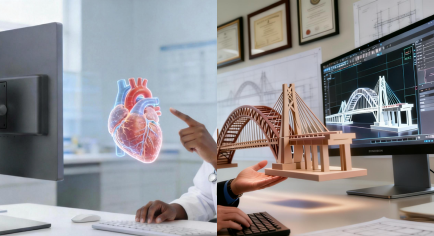
Professional 3D solutions for medical and industrial use: enhanced medical imaging with clearer contrast and detail; surgical navigation and industrial assembly visualization; real-time 3D remote collaboration and AI-assisted training simulation for digital operations across industries.